

When shopping for a cartridge stove, many buyers assume all gas canisters are interchangeable. This misunderstanding often leads to weak flames, failed ignition, or unusable fuel after delivery. For retailers, rental operators and end users, three core factors determine whether a canister matches your stove and works reliably on site: compatible stove types, low-temperature vaporization performance, and local market availability. This guide helps customers verify fuel compatibility before purchase and avoid costly mismatches for outdoor cooking, catering and event use.
1. Stove Compatibility: Not All Cartridge Interfaces Are Universal
Compatibility starts with valve design and working pressure, not just thread shape.
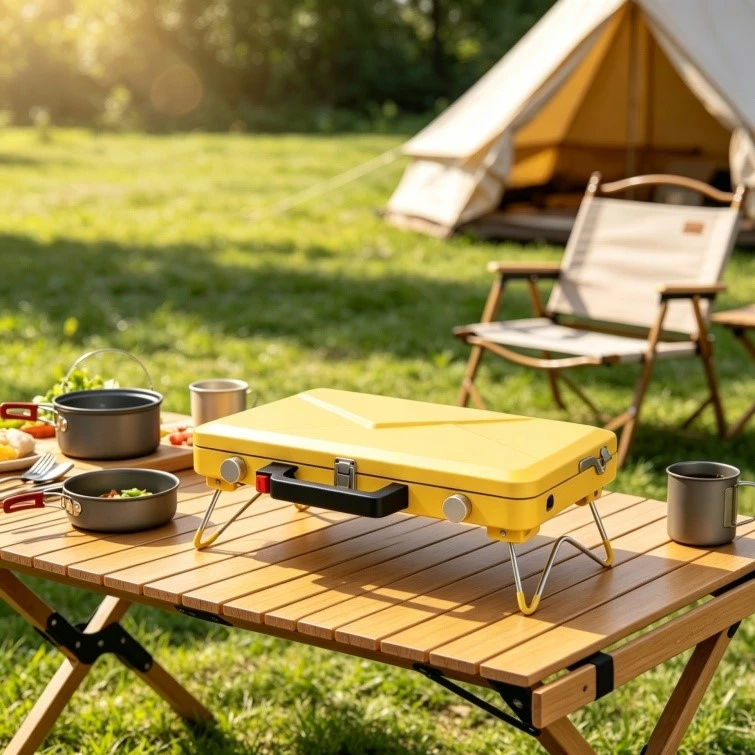
Standard pure butane cartridges are the rectangular click-in cassettes designed for dedicated butane cartridge stoves. These stoves have low-pressure regulators built for butane's stable vapor pressure under mild temperatures. They usually feature a magnetic auto-shutoff safety lock, the typical design for tabletop cartridge stoves widely sold in Asia, Australia and parts of Europe. You cannot simply hook a pure propane cylinder directly onto these stoves; propane's much higher internal pressure will overwhelm the original regulator and create safety risks.
Propane canisters (including threaded EN417 style blended canisters and large refillable propane tanks) pair with propane-specific stoves or dual-fuel stoves fitted with high-pressure regulators. Many backpacking screw-on stoves accept propane/iso-butane blends, but they are not the same as click-in butane cassette systems. Some dual-fuel cartridge stoves support both fuel types with adaptors, yet adaptors do not eliminate pressure risks and must be certified by the manufacturer.
Key buying rule: Match the fuel to the stove's original regulator and valve system. Do not rely only on visual similarity of connectors.
2. Temperature & Flame Performance: Boiling Point Is The Critical Difference
The biggest practical gap between butane and propane comes from boiling point - the temperature where liquid fuel turns into burnable gas.
Pure n-butane boils at roughly 0°C (32°F). Above this threshold, it delivers steady, clean combustion with consistent BTU output for grilling, boiling and pan cooking. Once ambient temperature drops near or below freezing, butane stops vaporizing effectively. Even before hitting 0°C, users will notice shrinking flame, sputtering and slow boil times. This makes pure butane suitable for spring, summer and mild autumn use in low-altitude regions. It performs poorly for winter catering, mountain trips, high-altitude locations or overnight events with cold evenings.
Propane boils at approximately -42°C (-44°F). It maintains reliable vapor pressure far below freezing and stays functional in cold weather, high altitude and windy outdoor settings. Its higher flame temperature supports faster heating for heavy-duty catering, large pots and continuous all-day service. The tradeoff is higher storage pressure, requiring thicker canister walls and stricter valve/regulator specs.
A middle option is isobutane-propane blended canisters. Blends improve cold performance over pure butane while keeping compact cartridge sizing, common for premium camping cartridge stoves.
3. Regional Availability: Fuel Access Is Often A Bigger Issue Than Stove Specs
Many customers overlook local supply chains when selecting a cartridge stove. A stove is only useful if replacement canisters are easy to source locally.
Disposable butane click cassettes are dominant in East and Southeast Asia, and widely stocked in general supermarkets, hardware stores and catering supply shops. The standardized click-in format creates mature, low-cost local supply. But in North America and many European markets, pure butane cassettes are less common; retailers tend to stock threaded propane or propane-isobutane blends instead.
Propane has excellent global availability. Small disposable threaded propane canisters and large refillable LPG tanks are widely available across North America, Europe, the Middle East and Oceania. For cross-border rental businesses, mobile catering fleets and customers travelling internationally, propane is usually the safer pick for fuel access. However, transport rules for pressurized propane vary heavily by country, with stricter courier and shipping restrictions.
4. Buyer Pre-Purchase Compatibility Checklist
Before ordering a cartridge stove or fuel canisters, confirm these points:
Check whether your stove is designed for click-in butane cassette, threaded propane/blend canister, or dual-fuel with certified adaptor.
Confirm your typical operating temperature and altitude; avoid pure butane for regular sub-zero or high-altitude use.
Search local stores to verify which canister type is regularly sold in your region.
Never modify regulators or use unapproved adaptors to cross fuel types.
Conclusion
For cartridge stove buyers, compatibility is more than a quick connector fit. Butane cassettes excel in mild climates with established local supply chains, delivering affordable, clean cooking for casual outdoor use and warm-season catering. Propane offers dependable cold-temperature performance and wider global availability, making it the preferred fuel for year-round commercial rental, winter events and high-altitude trips. By matching fuel type to stove regulator, working climate and regional supply, buyers avoid frustrating compatibility failures and get consistent, safe cooking performance from their cartridge stove.


